


Now You See Me, The Reef—A Sarah & Sebastian Short Film
Centred around The Great Barrier reef, one of Australia’s most vulnerable ecosystems, the second film in our philanthropic Now You See Me series highlights the challenges facing our world below the surface.
Filmed in the Great Barrier Reef by director Alice Wesley-Smith and SARAH & SEBASTIAN’s creative director, Sarah Gittoes, the duo were captivated by the sophisticated yet delicate world of the largest living organism on the planet. Written by RUSSH contributing editor, Anna Harrison and narrated by model and passionate advocate for the ocean Victoria Lee, the film beautifully documents the soaring reefs, deep canyons, and sculptural coral forms in cinematic vision.
The Great Barrier Reef is in danger and needs urgent action. Fuelled by a warming global climate, ocean temperatures are rising, resulting in an increased frequency of marine heatwaves. With this, coral are losing nutrients that help them survive, leading to starvation and often death. The impact is devastating and unprecedented.
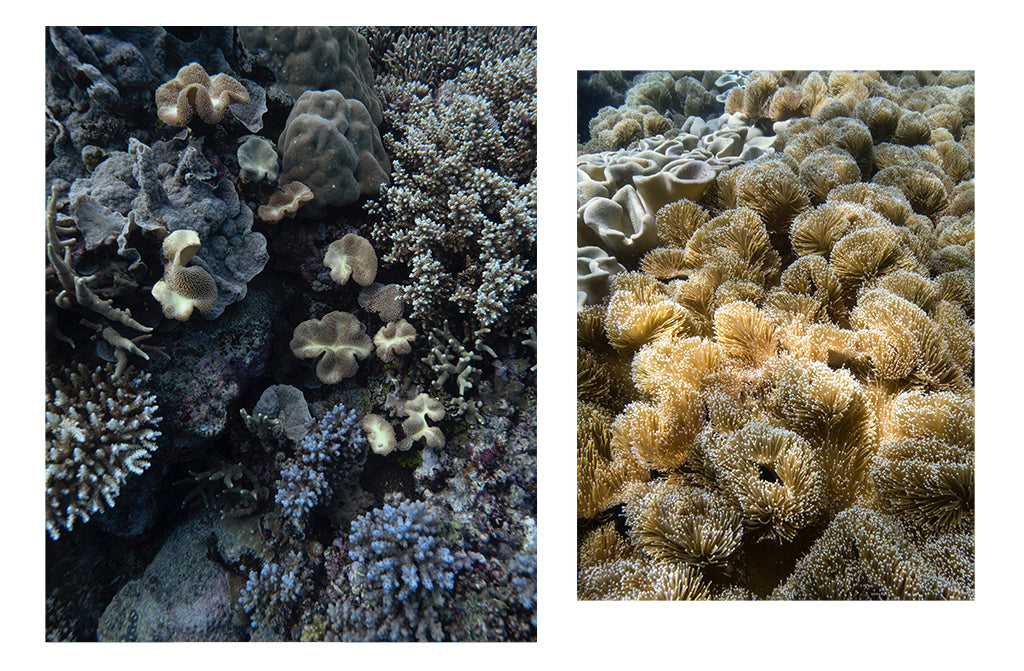
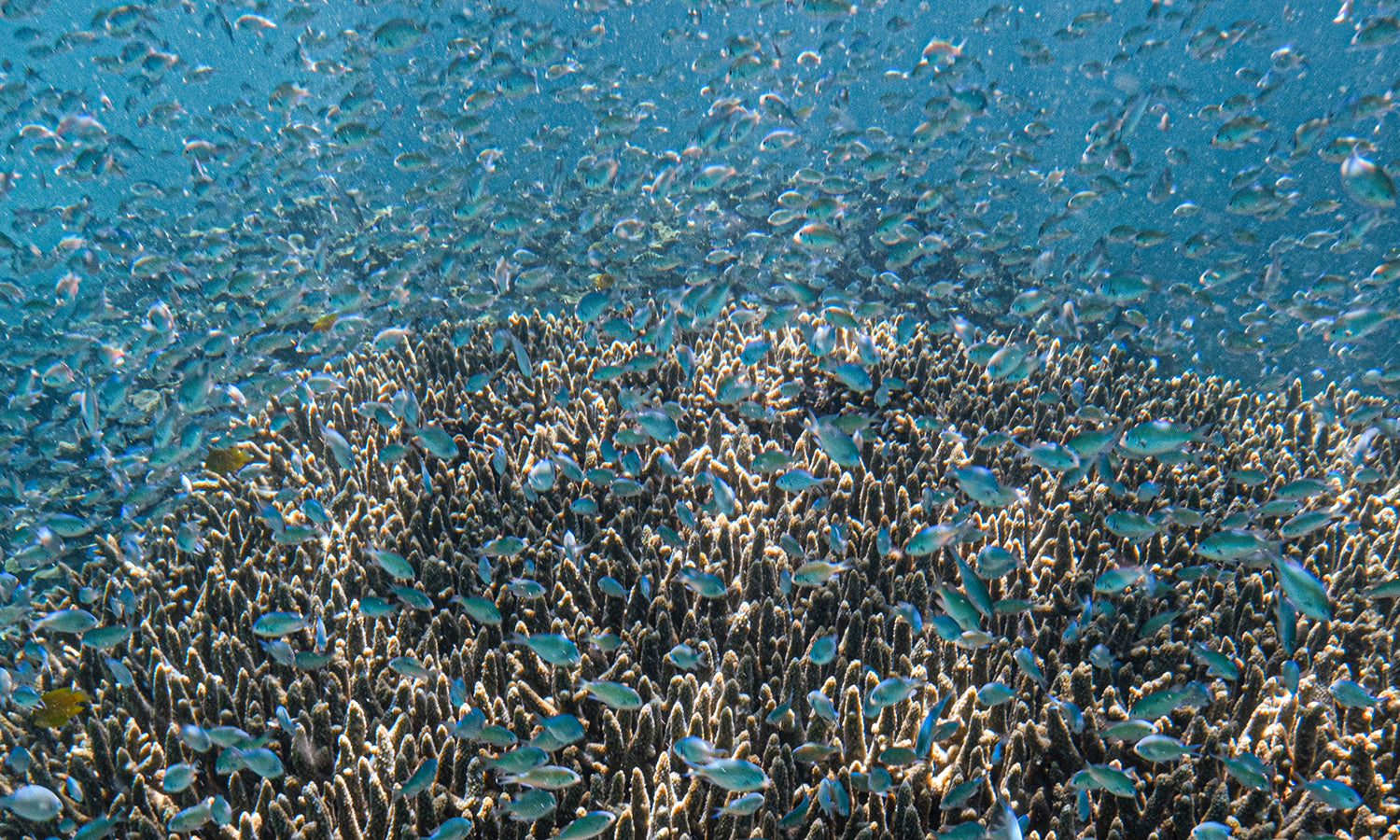
“Coral is undoubtedly resilient and whilst it is self-regenerating and regulating, the threats are occurring too quickly for the coral to adapt.
The existence of coral is defined by its harmonious exchange with the ecosystem of the ocean and now is the time to take meaningful action to restore the balance in our environment.”
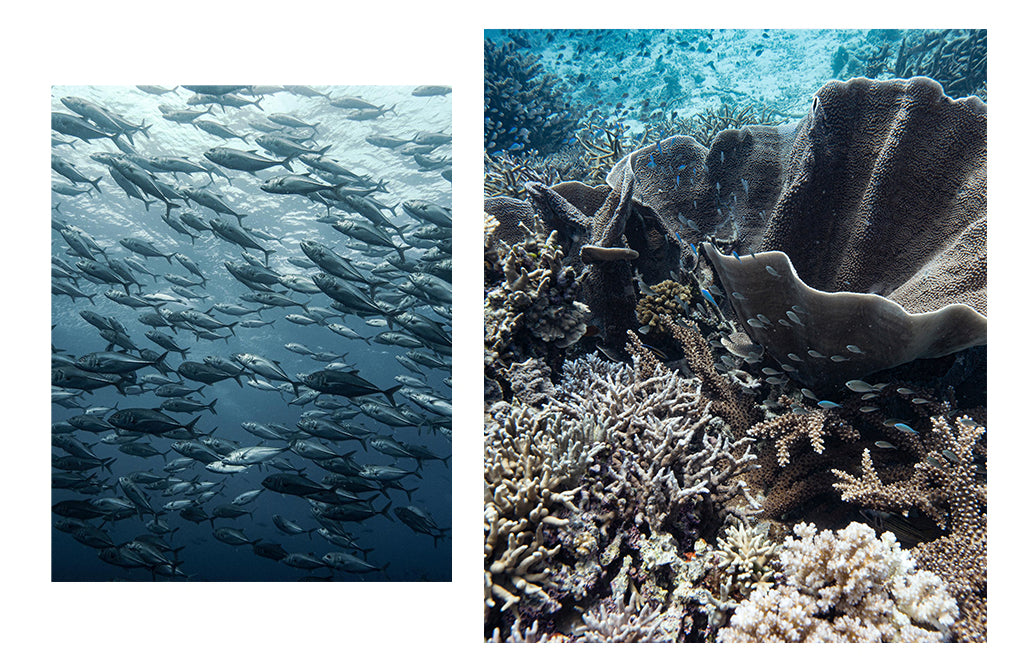
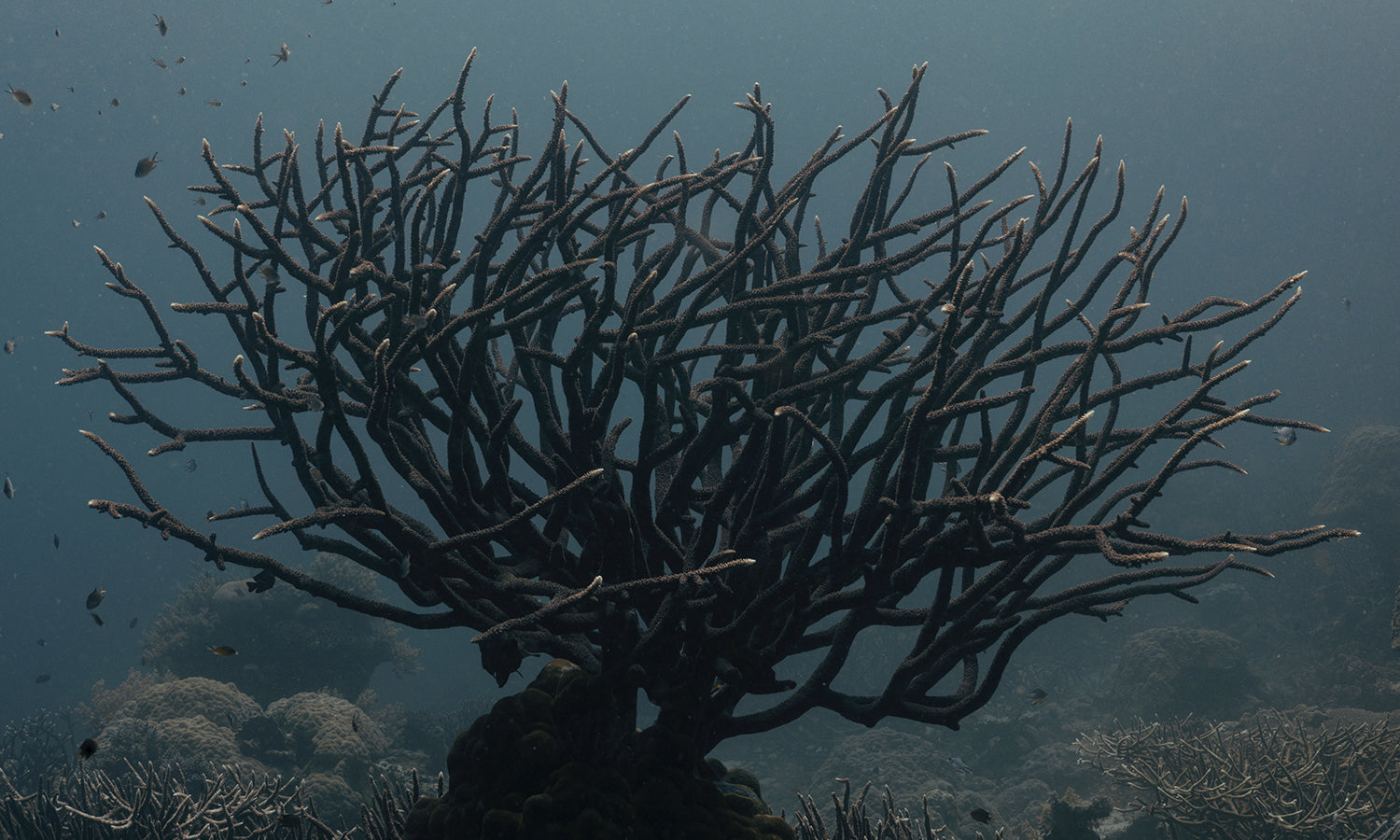
Conservation is not something that cannot be done in isolation, so the organisations that we partner with are integral to the mission of the NOW YOU SEE ME series.
As we celebrate our 10th Anniversary, we look ahead to the next decade, which is crucial for ocean conservation. The Xanthe Project is SARAH & SEBASTIAN’s pledge as a company to donate over a million dollars to ocean conservation within the next decade.
Building on our three-year partnership with the Australian Marine Conservation Society, we have carefully chosen additional partners who align with our mission across education, activism, political change and commercial impact.
The Xanthe Project is proud to support four independent Australian not-for-profit organisations:
The Australian Marine Conservation Society, Australia’s only national charity dedicated solely to protecting its precious ocean wildlife, passionate advocates who have defended our oceans for over 55 years.
Ocean Impact Organisation, which is a startup accelerator, with the purpose to transform ocean health by helping people start, grow, and invest in businesses that positively impact the ocean,
Take 3 for the Sea, an organisation built on a simple yet profound idea, to take 3 pieces of rubbish with you whenever you visit a beach or waterway. They are building a global movement, establishing education programs in schools, surf clubs and communities.
The Coral Sea Foundation’s Sea Women of the Great Barrier Reef program. This program empowers indigenous women from The Great Barrier Reef sea-country with the practical marine science skills and the marine conservation knowledge they need to be effective advocates for sustainable management of their marine resources.
Donations will be made from various initiatives including collection and product-specific sales as well as ongoing contributions.
As we continue to make waves within the jewellery industry, ocean conservation will be at the heart of our vision and The Xanthe Project is our commitment to support those who are really making an impact.
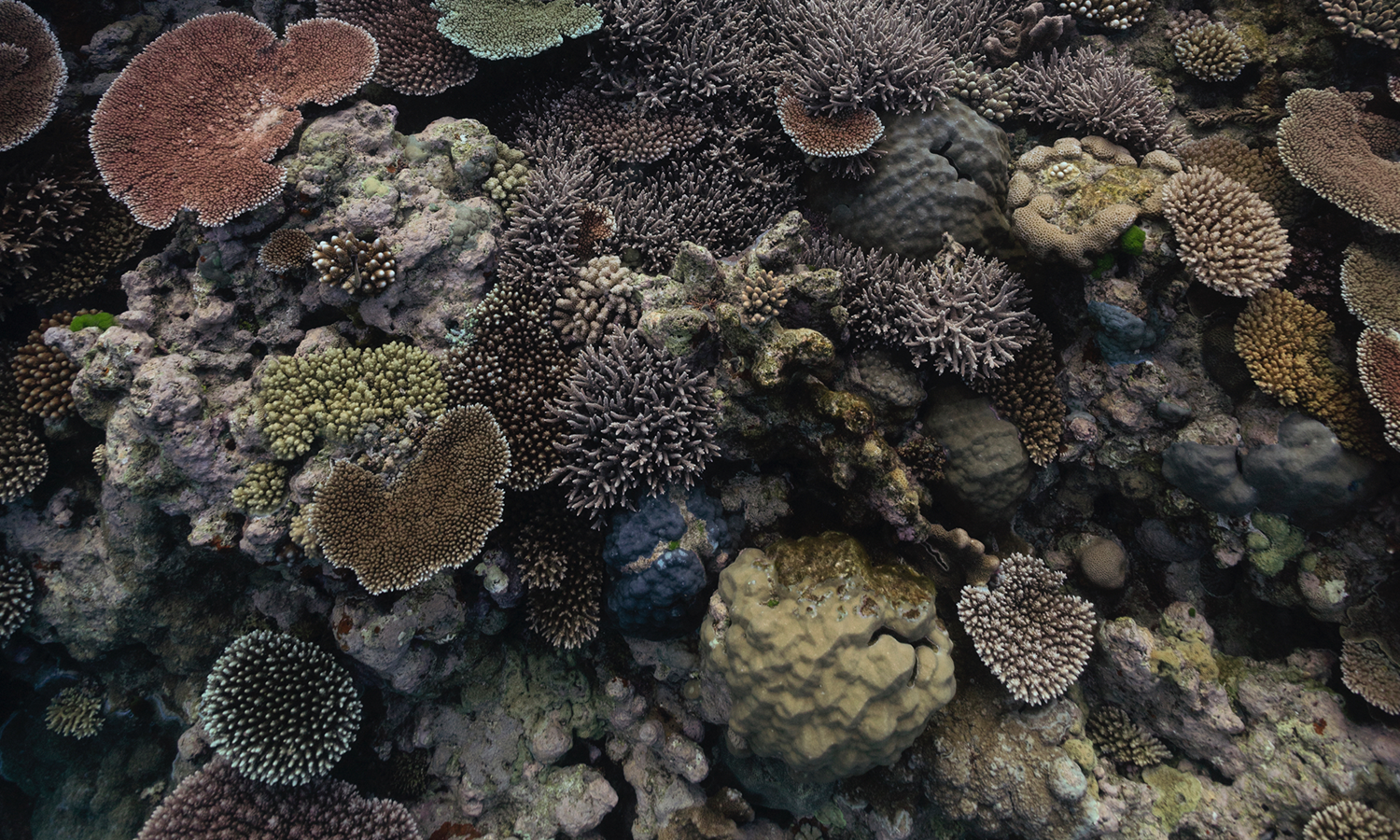
Photographs captured at The Great Barrier Reef by Sarah Gittoes.
Recommended

NOW YOU SEE ME, Ningaloo's Nursery—A SARAH & SEBASTIAN SHORT FILM
When we started the NOW YOU SEE ME film series four years ago, we didn’t know exactly where it would take us, only that we felt a responsibility to show the fragile beauty of Australia’s marine life, and the growing threats it faces. Ningaloo’s Nursery, our final chapter, is perhaps the most emotional and confronting journey we've taken yet. We travelled to Western Australia’s remote northwest, to a place that still feels truly wild. The Ningaloo region: Cape Range, the reef, and Exmouth Gulf, holds an ancient kind of magic. It’s home to whale sharks, manta rays, dugongs, and a tapestry of life we were honoured to witness. But it’s also a region in crisis. When we arrived, the reef was in the midst of a mass coral bleaching event. We hadn’t set out to tell a climate change story, but there was no ignoring it. One day we’d dive among radiant coral gardens; the next, we’d emerge shaken from ghostly, colourless reefs. The contrast was devastating. [featured_images1] Seeing it with our own eyes made the science real. These weren’t abstract statistics or satellite photos; they were living, breathing ecosystems vanishing in front of us. And it wasn’t just the reef. Exmouth Gulf, a vital nursery for this entire marine region, remains unprotected and is facing mounting industrial pressure. It’s excluded from World Heritage status, and still treated like an expendable buffer zone. We found that heartbreaking. We madeNingaloo’s Nursery with filmmaker Alice Wesley-Smith, whose sensitivity and sharp eye helped us tell this story with both urgency and reverence. The film premiered at the State Library of NSW on the eve of World Oceans Day. It was an intimate night, filled with friends, some brilliant environmental advocates, and leading lights from the fashion and creative industry. We hoped our audience would feel what we felt: awe, grief, and a spark to act. What we’ve learnt along the way in creating these films, is that it isn’t just about awareness anymore. It’s about advocacy. And with that in mind, we’ve launched a public petition calling for stronger national nature laws and for Exmouth Gulf to be formally protected. Because it deserves more than admiration – It needs guardianship. As this film series comes to a close, what stays with us is a deepened sense of responsibility. We can’t unsee what we’ve seen. And we don’t want others to look away. Go behind the scenes of NOW YOU SEE ME Ningaloo’s Nursery here. – SARAH & SEBASTIAN
Read the journal
Behind the Scenes: Filming Ningaloo’s Nursery
“THERE ARE EXPERIENCES THAT SHIFT YOUR PERSPECTIVE. NINGALOO’S NURSERY WAS ONE OF THEM.” Months before we began filming, the concept for the final chapter of our Now You See Me series had already taken shape. At first, it was a story of scale and spectacle; whale sharks, manta rays, pristine coral reefs. But the more we listened, the more urgent the story became. Our filmmaker, Alice Wesley-Smith, and I spoke with scientists and conservationists who explained the interdependence of three ecosystems: Ningaloo Reef, Cape Range, and Exmouth Gulf. What stayed with me wasn’t just what had been protected, but what hadn’t. Exmouth Gulf, often referred to as Ningaloo’s nursery for its critical role in early marine life stages, remains outside the World Heritage boundaries. When we landed in Exmouth, the heat was immediate and intense. We arrived after a cyclone, in the middle of a historic marine heatwave and a mass coral bleaching event. The damage was clear. But so was the opportunity: to shine a light on a place that urgently needs protection. NINGALOO REEF Filming in remote locations always comes with its own set of challenges; equipment, logistics, finding the wildlife, dealing with weather. And that's all before you even get wet. “UNDERWATER, NINGALOO IS HYPNOTIC. IT’S ONE OF THE MOST BIODIVERSE PLACES I’VE EVER SEEN...” Kaleidoscopic coral gardens, an abundance of fish weaving through reefs, and that rare sense of being a visitor in someone else’s world. But not everything was as it should be. The coral bleaching was even more devastating than we’d expected. So much so that on a couple of dives we just couldn’t stay underwater any longer, it was too heartbreaking to witness. Still, there were moments that left me speechless. A manta ray swam beside me, mirroring my movements for what felt like minutes. Later, swimming alongside whale sharks was humbling. And exhausting. Even when they glide, they move faster than you think. THE GULF To the east, the Gulf is quieter. Less photographed. But ecologically, just as important. The palette changed, deeper greens, silty browns, thick mangrove roots. Our drone followed the winding channels of the wetlands. We waded through knee-deep shallows, tracking shovelnose rays in seagrass beds. We snorkelled through mangroves, trying not to stir the bottom and cloud the frame, holding our breath, waiting for stillness. CAPE RANGE Rising between reef and gulf, the Cape Range is the spine of the peninsula. On our first morning, we woke before dawn to visit Charles Knife Canyon for sunrise. We drove through the pitch black and parked alongside a steep gorge. As the sun came up over the horizon, we caught our first glimpse of the incredible scale of this place and raced to capture the glow of first light before the sun climbed too high. At Yardie Creek, on our last night, we hiked through fossil beds etched with coral from millions of years ago. Rock wallabies watched us from the cliffs. The past felt close here. [featured_images1] As we packed up our cameras for the final time and looked out towards the reef, I felt the weight of what we’d witnessed. Ningaloo’s Nursery is exactly that, a cradle of life. It’s where humpbacks return to raise their calves, where endangered sawfish still slip through the estuaries, where coral, mangrove, and mountain all converge. And yet, it’s not protected. “DESPITE EVERYTHING WE KNOW; THE SCIENCE, THE CULTURAL VALUE, THE IRREPLACEABLE BIODIVERSITY. EXMOUTH GULT IS STILL VULNERABLE...” To dredging, to development, to pollution. We saw firsthand what’s at stake. We felt it in the heat of the water and in the silence of dying coral. Over five films, Now You See Me has taken us across Australia’s coastlines, from southern kelp forests to tropical reefs. Each film has revealed what’s at risk. This final chapter is a call to action. If you do one thing for our oceans today, make it count. Sign our petition to strengthen Australia’s nature laws. Because places like this can’t speak for themselves. But we can.
Read the journal
Now You See Me, Sharks and Rays—A SARAH & SEBASTIAN Short Film
SARAH & SEBASTIAN is honoured to present Now You See Me, Sharks and Rays, the third film in ourshort film series illuminating the Australian shark and ray species that are in desperate need of protection. Watch the full film here.
Read the journal
 CAD $
CAD $
 USD
USD
 GBP
GBP
 SGD
SGD
 NZD
NZD
 JPY
JPY
 HKD
HKD
 EUR
EUR